
How to Work With a Recruiter to Find a Job: Complete Guide
Learn how to work with recruiters effectively. Discover strategies to connect, communicate, and land your next position with expert guidance.
Understanding Your Recruiter's Role in Your Job Search
When you decide to work with a recruiter, you're partnering with a professional who understands the job market better than most. A recruiter acts as a bridge between candidates and employers, identifying opportunities that match your skills and career goals. But what exactly does this partnership entail?
Recruiters spend their days building relationships with hiring managers and companies, learning about their hiring needs, company culture, and the specific requirements for each role. They use this knowledge to recommend qualified candidates who fit both the job description and the company's values.
Try Whileresume
Publish my resumeThe key difference between working alone and working with a recruiter is access. Recruiters have insight into opportunities that may never be publicly posted. They know which companies are expanding, which positions are opening, and what compensation packages are realistic for your experience level.
Types of Recruiters: In-House vs. Agency
In-House Recruiters
An in-house recruiter works directly for a company and focuses exclusively on hiring for that organization. They understand their company's culture, hiring timeline, and specific skill requirements deeply. When you connect with an in-house recruiter, you're speaking directly to someone who can influence your hiring decision.
Agency Recruiters and Staffing Firms
An agency recruiter or staffing firm represents multiple employers. These professionals work on contract basis, matching candidates with various positions across different industries. The advantage? They have broader access to opportunities. The consideration? They work with many candidates, so standing out requires strategy.
How to Find Recruiters Who Actually Match Your Goals
Leverage LinkedIn for Recruiter Outreach
Want to find recruiters? LinkedIn is your primary resource. Search for recruiters who specialize in your field and industry. Look at their profiles—do they regularly post about your sector? Do they have connections in companies you're targeting?
When you identify a recruiter on LinkedIn, send a personalized message. Don't just say \"I'm looking for a job.\" Instead, demonstrate that you understand their specialization. Mention specific companies you're interested in or roles that align with your career transition.
Explore Staffing Agency Websites
Many staffing agencies allow you to apply for a job directly on their websites. This is your chance to upload your resume and complete their candidate profile. Quality staffing firms review submissions and reach out to candidates whose skills match their client needs.
Build Your Network Within Professional Communities
Industry-specific communities and forums attract recruiters actively searching for talent. Whether it's a Slack group, Facebook community, or industry meetup, these spaces connect you with professionals in your field who understand your career goals.
Preparing Your Resume Before Contacting Recruiters
Optimize Your Resume for Recruiter Scanning
Your resume is your first impression. Recruiters spend seconds scanning documents. Is your resume formatted clearly? Do your skills and accomplishments stand out immediately?
Recruiters look for specific keywords related to the positions they're filling. If you're making a career change, your resume should highlight transferable skills. Don't just list what you did—explain the impact. Numbers matter. Instead of \"managed a team,\" write \"led a team of 12 that increased productivity by 30%.\"
Create a Compelling Professional Summary
Your professional summary on your resume tells recruiters what you're looking for. Are you seeking a career change? Specify the role, industry, or field. This clarity helps recruiters match you with appropriate opportunities.
| Resume Section | What Recruiters Look For |
|---|---|
| Professional Summary | Clear statement of your career goals and desired role |
| Skills Section | Keywords matching the positions you're targeting |
| Work Experience | Quantifiable achievements and skill demonstrations |
| Education | Certifications relevant to your target field |
Crafting Your Initial Contact With Recruiters
How to Email a Resume to Recruiters
When you send your resume to a recruiter, your email matters as much as the document itself. A generic email gets deleted. Your message should explain why you're reaching out to that specific recruiter at that specific time.
Start with:
I'm impressed by your focus on [specific industry] talent. I'm a [your experience level] professional seeking a position in [target role/company type].
This shows you've done your homework.
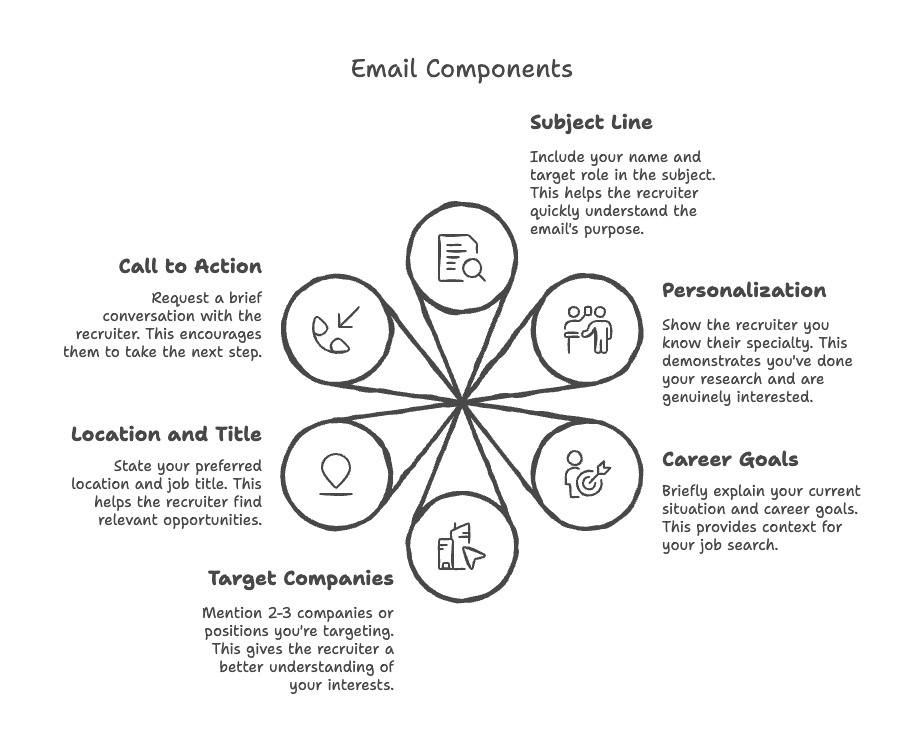
Key Elements of an Effective Recruiter Email
- Clear subject line with your name and target role
- Personalization showing you know their specialty
- Brief explanation of your current situation and career goals
- Mention of 2-3 companies or positions you're targeting
- Your preferred location and job title
- A clear call-to-action requesting a brief conversation
What Recruiters Need to Know About You
Be Honest About Your Experience and Expectations
Your relationship with a recruiter succeeds when built on honest communication. Don't oversell your skills or understate your experience. Recruiters will discover inconsistencies, and it damages your professional reputation.
Be clear about your ideal job. What tasks do you want to perform in a new job? What job title do you want to have? Is salary your primary concern, or does company culture matter more? These specifics help recruiters identify the right opportunities.
Set Clear Expectations on Timeline and Compensation
How much does it cost to work with a recruiter? Generally, nothing. Recruiters are paid by employers when they place a candidate. However, discuss timeline expectations. How soon do you plan to start a new role? Are you interviewing with multiple companies simultaneously?
Regarding compensation, be realistic. Research industry standards for your field and experience level. Your recruiter will help you meet reasonable salary expectations based on the market.
Building Trust: Do's and Don'ts When Working With Recruiters
Do's for a Strong Recruiter Partnership
- Trust your recruiter to do their job and provide expert guidance
- Respond promptly to emails and messages—recruiters move fast
- Provide feedback after interviews and opportunities
- Update your profile when your skills or goals change
- Ask questions about companies, roles, and expectations before interviews
- Share your career goals openly and regularly
Avoid These Recruiter Relationship Mistakes
- Don't apply for the same position through multiple recruiters—it confuses employers
- Never ghost a recruiter after they've invested time in your search
- Avoid lying about your experience or availability
- Don't ignore feedback or advice without consideration
- Never accept an offer and then cancel without notification
Understanding the Recruiting Process and Timeline
What is the 3-Month Rule in a Job?
Many recruiters follow an unwritten rule: candidates should commit to at least 3 months with a position before moving on. This timeframe allows companies to evaluate your fit and you to prove your value. If you start a job and leave within weeks, future employers will question your stability.
How Often Do Staffing Roles Open for Career Transition Candidates?
Companies constantly seek talent for positions across all experience levels. However, roles for career changers are specialized. Want to start working with a recruiter to guide your career transition? Look for recruiters who have placed candidates making similar changes. They'll understand your situation and can market your transferable skills effectively.
| Career Stage | Best Recruiter Type | Expected Timeline |
|---|---|---|
| Entry-Level | Staffing agencies and in-house graduate programs | 4-8 weeks |
| Career Change | Specialized recruiters in target industry | 8-16 weeks |
| Senior/Executive | Executive search firms and headhunters | 3-6 months |
Smart Questions to Ask Your Recruiter
Understanding the Companies and Positions
Start by asking smart, targeted questions about opportunities. Here's what you should know:
- What specific skills is the hiring manager seeking?
- What is the company's culture, and how does it align with your values?
- What does success look like in this role during the first 90 days?
- How many candidates are competing for this position?
- What is the realistic salary range based on experience and market?
- What are the next steps in the interview process?
- Will this be a direct hire or contract role?
Screening Questions to Assess Recruiter Quality
Not all recruiters are equal. Before fully working with someone, ask screening questions:
- How long have you been recruiting in [your industry]?
- Can you share examples of candidates you've placed in similar roles?
- How do you identify and source opportunities?
- What is your communication style and expected frequency of updates?
- How do you market candidates to hiring managers?
How Recruiters Market You to Employers
The Recruiter Presentation: Your Key to Landing Interviews
Once you've partnered with a recruiter, they take your resume and pitch you to hiring managers. But this isn't just forwarding your document. Top recruiters craft a narrative. They explain why you're a strong fit for the role, highlight your unique strengths, and address any potential concerns.
This is where your initial professional summary and skill alignment matter. If your recruiter can easily explain your value in 2-3 sentences, hiring managers will check your resume.
Protecting Yourself From Job Scammers
Unfortunately, not every \"recruiter\" is honest. Protect yourself by verifying credentials. Does the recruiter have a legitimate company website? Can you find them on LinkedIn with professional experience? Legitimate recruiters never ask for payment upfront or request personal financial information.
Evaluating Recruiter Effectiveness for Your Job Search
What Recruiters Are Not Telling You
Some recruiters focus on quick placements rather than career fit. They might push you toward opportunities that don't truly match your goals. Your responsibility is asking pointed questions about role requirements and company values.
Building Long-Term Relationships With Recruiters
Think of your recruiter partnership as long-term. Even after you land a position, maintain contact. When you're ready for your next opportunity—whether in 2 years or 5—having an established relationship with a recruiter who understands your career goals and strengths accelerates your next search.
Maximizing Your Job Search Results
Diversify Your Recruiter Network
Working with multiple recruiters increases your chances of finding the right position. However, transparency matters. Let each recruiter know you're working with others. Avoid applying for the same role through different recruiting channels—it creates confusion and damages your credibility.
Stay Engaged and Follow Up
Your recruiter is busy. If you haven't heard from them in 2-3 weeks, initiate contact. A simple message asking about new opportunities keeps you on their radar. Regular communication signals your serious commitment to the job search.
Prepare for Interviews With Recruiter Guidance
When a recruiter sends you an interview opportunity, ask for details about the hiring manager, company priorities, and interview format. Many recruiters offer mock interview sessions or advice based on their client relationships. This insider perspective gives you a competitive edge.
Essential Advice From Professional Recruiters
Tips for Recruiter Success From Industry Experts
Expert recruiters consistently share one piece of advice: be proactive. Don't wait for recruiters to find you. Research companies you want to work for, identify their hiring needs, and present this information to your recruiter. This shows initiative and focus.
Second, learn about the recruiting process. Understand that candidates who demonstrate knowledge about the companies they're targeting stand out. Companies prefer candidates who've done their homework.
Your Role in the Hiring Process
You're not passive in this relationship. You set the tone by being responsive, honest, and engaged. Your recruiter handles sourcing, vetting, and initial negotiations. You handle showing up prepared, asking good questions, and demonstrating genuine interest in opportunities.
Next Steps: Getting Started With a Recruiter Today
Your Action Plan
Ready to start working with a recruiter? Begin by auditing your resume and LinkedIn profile. Update them with clear language about your target role, preferred location, and career goals.
Next, identify 5-10 recruiters who specialize in your field. Use LinkedIn, Google search, and industry websites to find them. Send personalized emails to each, demonstrating that you understand their work and why you'd be a good fit for their client list.
Finally, prepare for initial conversations. Know your answer to: What's your ideal job? What specific tasks do you want to perform? What's your preferred compensation? This clarity accelerates the recruiting process and helps your recruiter deliver real results faster.