
Interview Candidate Feedback: Examples, Templates & Best Practices
Master candidate feedback with actionable examples, constructive templates & best practices. Streamline your hiring process with effective evaluation techniques.
What Is Interview Candidate Feedback?
Interview candidate feedback represents a structured evaluation provided to job applicants following their interview experience. This feedback serves as a communication bridge between your company and candidates, offering insights into their performance, strengths, and areas for improvement. Whether you're providing positive reinforcement or constructive guidance, feedback plays a key role in shaping the candidate's understanding of their interview performance.
Try Whileresume
Publish my resumeOffering detailed feedback demonstrates your organization's commitment to respectful candidate relations and professional recruitment practices. It's not simply about rejecting or accepting an applicant—it's about creating a meaningful dialogue that enhances the overall experience.
Why Providing Candidate Feedback Matters
Are you spending significant time formulating honest feedback that doesn't discourage candidates? You're not alone. Many recruiters struggle with this balance. The reality is that providing feedback requires a thoughtful approach, yet the benefits justify the effort.
When you offer actionable feedback, candidates gain valuable insights into their abilities and potential. This approach strengthens your company's reputation as an employer who respects talent. Additionally, candidates who receive constructive guidance are more likely to apply again for future roles, building your talent pool organically.
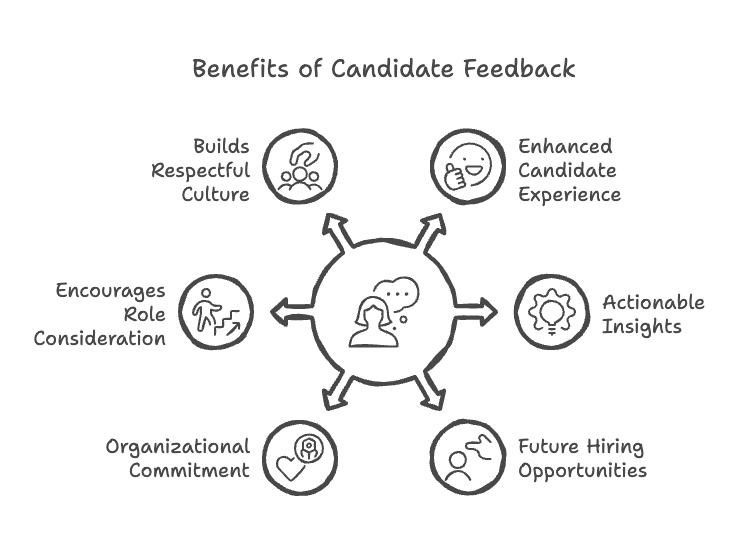
Key Reasons to Prioritize Feedback
- Enhances candidate experience and employer brand reputation
- Provides actionable insights that help applicants improve their skills
- Creates opportunities for future hiring relationships with suitable talent
- Demonstrates organizational commitment to professional recruitment management
- Encourages candidates to consider other roles within your company
- Builds a respectful, transparent hiring culture that attracts quality applicants
How to Evaluate a Candidate After an Interview
Evaluation is the foundation of effective feedback. Before drafting your message, take time to assess the candidate's performance across multiple dimensions. This detailed approach ensures your feedback is specific, fair, and truly valuable.
The evaluation process should happen immediately after the interview ends. Why? Because your impressions are fresh, and you can identify specific moments that demonstrated the candidate's strengths or highlighted areas needing improvement.
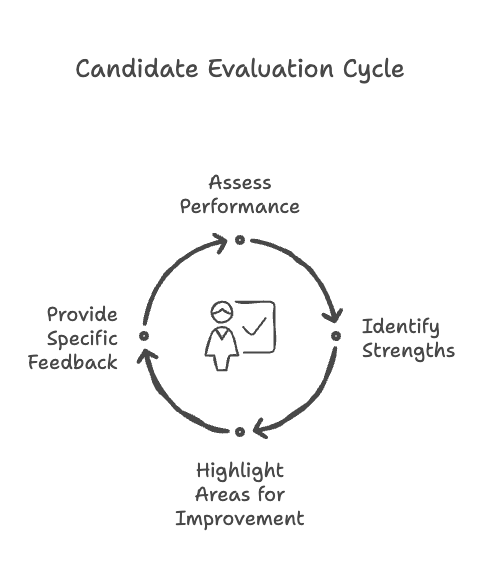
Essential Evaluation Criteria
| Evaluation Category | What to Assess | Questions to Ask |
|---|---|---|
| Technical Skills | Job-specific knowledge and expertise | Did they answer technical questions accurately? Do they possess the required abilities for this position? |
| Communication Skills | Clarity, listening, and expression | Could they articulate ideas effectively? Did they demonstrate active listening and ability to discuss complex topics? |
| Soft Skills | Teamwork, attitude, and problem-solving | How did they handle challenging questions? Did they show growth potential and collaborative thinking? |
| Experience & Knowledge | Relevant background and industry insights | Do their demonstrated skills match the role requirements? What valuable expertise did they highlight? |
| Cultural Fit | Alignment with company values and team dynamics | Would they thrive in this team environment? Do their professional approach match your organization's culture? |
Positive Interview Feedback Examples
Positive feedback should be specific and highlight genuine strengths. Vague praise like "good job" lacks the detail that makes feedback truly valuable. Instead, reference concrete moments from the interview.
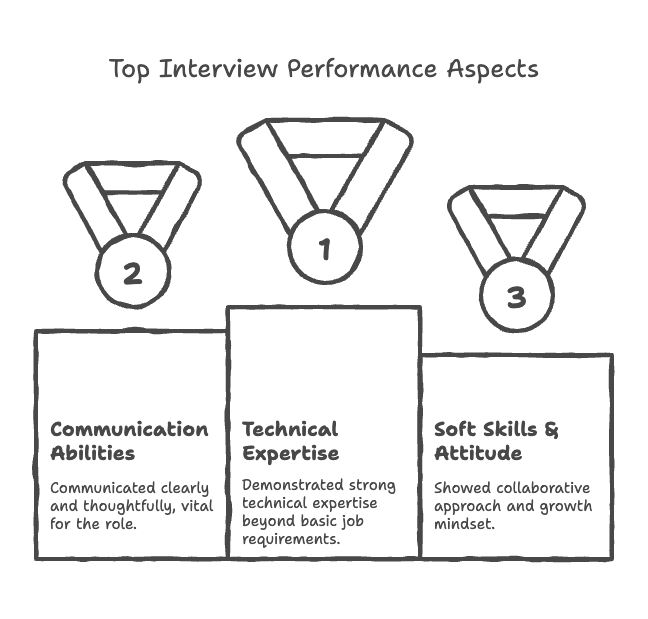
Strong Positive Feedback Phrases
On Technical Knowledge:
- Your explanation of [specific topic] demonstrated strong technical expertise that clearly goes beyond basic job requirements.
- The way you approached the problem-solving question showed sophisticated thinking and practical knowledge of industry best practices.
- Your ability to discuss advanced technical concepts with confidence suggests excellent command of the skills this position demands.
On Communication Abilities:
- Your communication style was exceptionally clear. You explained complex ideas in accessible language, which is vital for this role.
- We appreciated how you listened carefully to questions and answered with relevant, thoughtful responses.
- Your ability to articulate your experience and ask clarifying questions during the interview showed mature professional communication.
On Soft Skills & Attitude:
- Your collaborative approach and enthusiasm for team-based problem-solving align perfectly with our company culture.
- The growth mindset you demonstrated when discussing past challenges shows you're committed to continuous improvement.
- Your respectful, professional demeanor throughout the interview made a strong positive impression on the entire team.
Constructive Feedback Examples for Interview Challenges
Constructive feedback addresses gaps without discouraging the candidate. The goal is offering actionable guidance they can use for future opportunities. This approach maintains respect while being honest about areas needing development.
Handling Communication Gaps
When a candidate struggled to articulate ideas clearly, phrase feedback this way:
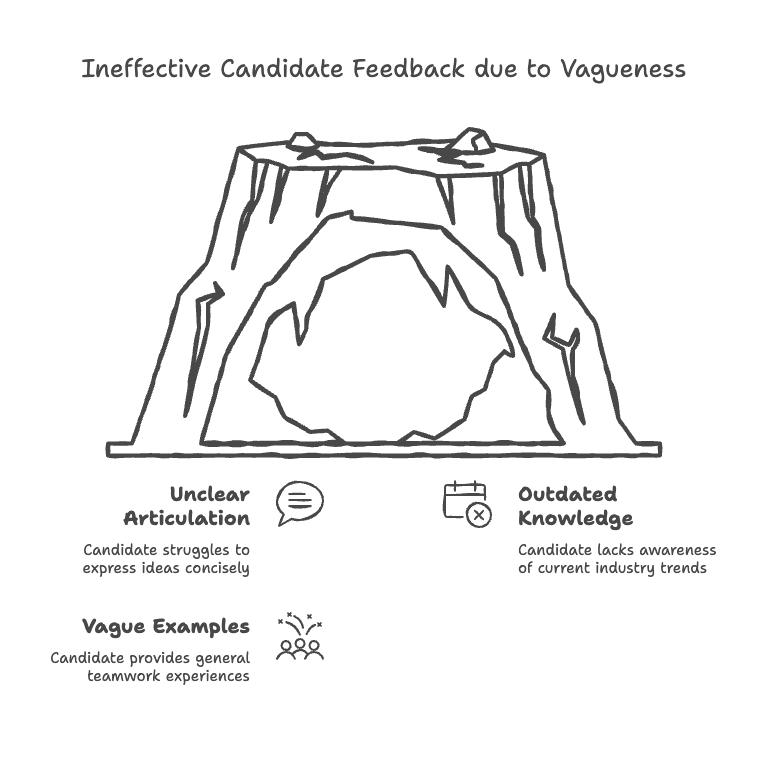
During the discussion about your previous project, I noticed you provided many details at once. For future interviews, try organizing your thoughts into 2-3 main points before diving into specifics. This helps ensure your audience fully grasps your key contributions. Consider using frameworks like 'First, I did X. Second, I accomplished Y. Finally, this resulted in Z.' This approach strengthens communication effectiveness.
Addressing Technical Knowledge Gaps
When we discussed [topic], you seemed less familiar with recent industry developments in this area. This doesn't mean you lack ability—it suggests focusing on learning current best practices would enhance your expertise. We recommend reading [specific resource] or exploring [particular skill area] before your next interview for a similar role.
Developing Soft Skills
Your technical knowledge is solid. However, when discussing teamwork experiences, try providing more specific examples of collaboration challenges you've overcome. Instead of general statements, share a situation where you disagreed with a team member, how you handled it respectfully, and what you learned. This demonstrates your ability to navigate complex team dynamics.
Negative Interview Feedback Examples
Delivering negative feedback requires particular care. Your language should remain professional and focus on observable behaviors rather than personal judgments. Remember, even unsuccessful candidates deserve respectful, actionable guidance.
| Situation | Effective Phrasing | What to Avoid |
|---|---|---|
| Insufficient technical skills for the role | While your foundational knowledge is evident, this position requires advanced expertise in [skill]. We recommend developing this specific ability before applying for senior roles. | You clearly don't have the skills needed. |
| Poor preparation | Your answers suggest you hadn't reviewed our company's recent projects. Future interviews go better when you research the organization thoroughly beforehand. | You weren't prepared at all. |
| Weak interview performance overall | "While you have relevant experience, your interview answers didn't effectively showcase your best qualities. Consider practicing your presentation skills and preparing concrete examples of your achievements. | Your interview was disappointing. |
| Lack of suitable fit | "Your background shows promise, but this particular role requires specific expertise in [area] that differs from your current focus. We'd love to hear from you when positions more aligned with your skill set open. | You're just not right for us. |
Technical Interview Feedback Examples
Technical roles demand specific, detailed feedback addressing coding ability, problem-solving approach, and technical knowledge. Generic comments don't help candidates improve.
For strong technical performance: Your solution demonstrated excellent algorithm knowledge and efficient code structure. Your explanation of your approach showed clear thinking about optimization. I appreciated how you considered edge cases before writing the solution.
For technical improvement areas: Your logic was sound, but the code could be more efficient. I'd suggest exploring [specific technique] to enhance performance. Additionally, adding comments to explain complex sections would improve code readability. These enhancements would strengthen your position for similar technical roles.
Best Practices for Providing Feedback
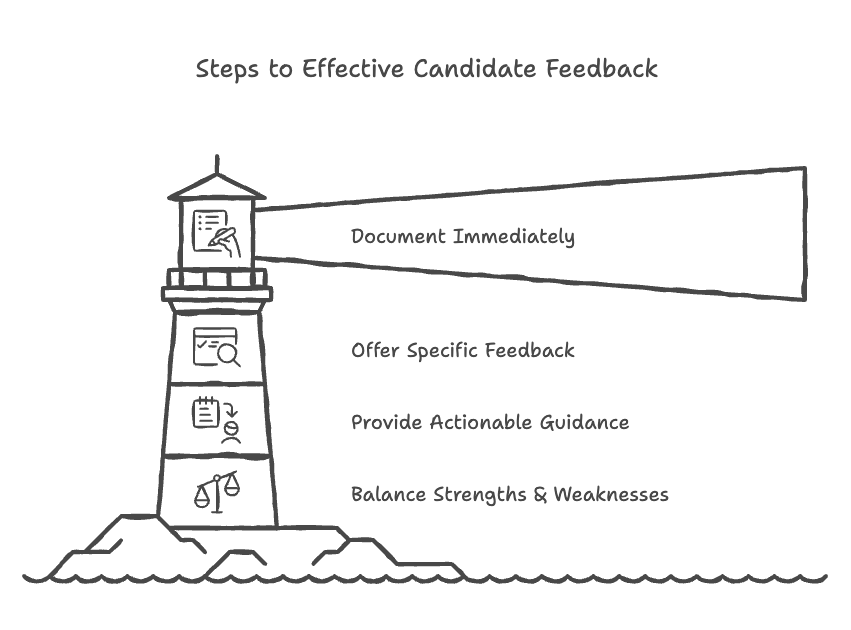
Document Feedback Immediately After the Interview
Don't wait. Write detailed notes while the interview is fresh in your memory. Include specific examples, direct quotes when possible, and your assessment of their performance. This documentation becomes invaluable when you need to provide detailed feedback or make hiring decisions later.
Offer Specific and Unbiased Feedback
Avoid vague language. Instead of "you need to improve communication," write "when discussing your project leadership, provide more concrete examples of how you resolved team conflicts." Specificity makes feedback actionable.
Provide Constructive, Actionable Guidance
Each piece of feedback should include potential next steps. What can the candidate do to improve? What resources would help them develop these skills? This transforms criticism into a guide for growth.
Balance Strengths With Areas for Improvement
Never deliver only negative feedback. Start with genuine strengths you observed, then address development areas. End on a forward-looking note about future opportunities. This balanced approach maintains the candidate's confidence while being honest about gaps.
Interview Feedback Email Templates
Positive Feedback Email
Subject: Your Interview With [Company Name]—Positive Feedback
Hi [Candidate Name],
Thank you for taking the time to interview with our team. We were impressed by your strong technical knowledge and the way you approached our problem-solving questions. Your ability to explain complex concepts clearly, combined with your collaborative attitude, stood out to us.
While we've selected another candidate for this particular role, we genuinely valued our conversation. Your expertise in [specific area] and your growth mindset suggest you'd thrive in positions that leverage these strengths. We'd encourage you to apply for similar opportunities as they become available.
Best regards,
[Your Name]
Constructive Feedback Email
Subject: Interview Feedback & Development Suggestions
Hi [Candidate Name],
Thank you for participating in our interview process. You demonstrated solid foundational knowledge in [area]. Moving forward, we'd suggest focusing on [specific skill development]. Consider [concrete actionable suggestion] to enhance your ability in this area.
Additionally, when discussing your previous roles, providing more detailed examples of specific challenges and your solutions would strengthen your interview performance. We recommend preparing 3-5 concrete stories before your next interview.
Your professional approach and willingness to engage with challenging questions are genuine strengths. With continued focus on [development area], you'll be a more competitive candidate for future roles. We'd welcome your application when you feel ready to move forward in your development journey.
Best regards,
[Your Name]
What to Include in Effective Candidate Feedback
Essential Elements
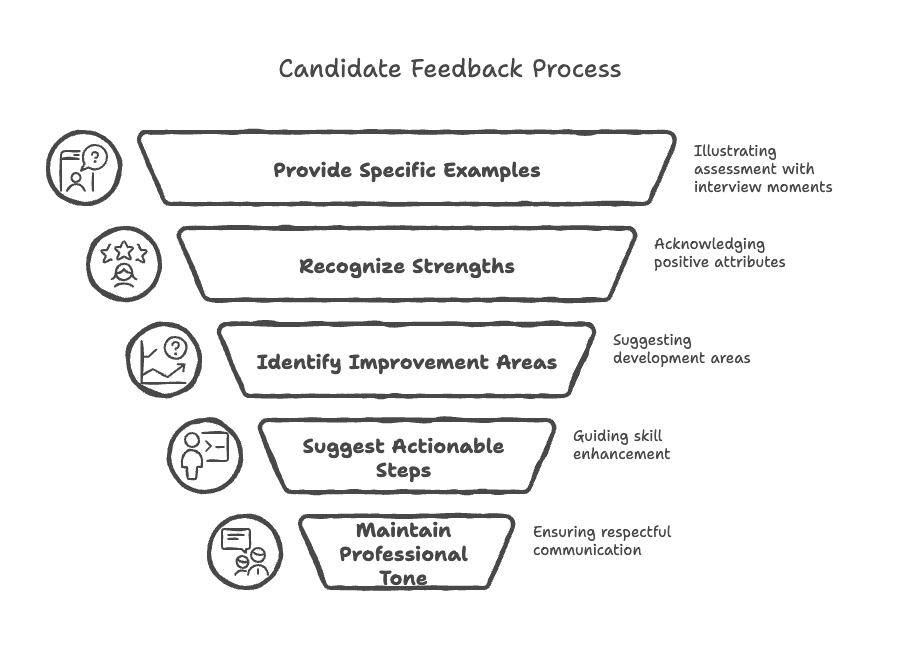
- Specific examples from the interview demonstrating your assessment
- Recognition of strengths they demonstrated during the conversation
- Clear areas for improvement with concrete suggestions for development
- Actionable next steps they can take to enhance their skills or approach
- Professional, respectful tone that maintains dignity regardless of the hiring decision
- Encouragement for future opportunities when applicable
- Your contact information if they have follow-up questions
Common Mistakes to Avoid
Vague language weakens feedback. Avoid phrases like "needs improvement" without explaining what specifically needs to change. Instead, reference precise observations: When discussing your leadership experience, provide concrete examples of how you handled disagreements within your team.
Never make personal judgments. Comments about appearance, personality traits unrelated to job performance, or assumptions about their thinking harm your professional reputation. Stick to observable, job-related behaviors.
Don't compare candidates. Each person's feedback should address their individual performance, not how they stack up against others. This approach maintains fairness and prevents unnecessary antagonism.
Avoid false encouragement. If a candidate isn't suitable for the role or their skills fall significantly short, honest feedback respects their time more than empty praise. Balance honesty with respect.
Streamlining Your Feedback Process
Spending significant time formulating feedback for each applicant stretches already-thin recruiting schedules. Modern tools and thoughtful processes make this management challenge easier.
Create a feedback template aligned with your evaluation criteria. This approach ensures consistency across candidates while reducing composition time. Your template might include sections for technical assessment, communication evaluation, soft skills analysis, and recommended next steps.
Use your ATS and recruitment automation tools to track interview notes and generate structured feedback formats. Many platforms now offer features specifically designed for efficient feedback management, helping you sort and organize candidate information systematically.
Consider dividing feedback responsibilities among your hiring team. When multiple people provide input on a candidate's performance, the resulting feedback becomes more balanced and comprehensive. This shared approach also accelerates the feedback delivery process.
Enhancing Candidate Experience Through Feedback
Feedback contributes directly to your company's employer brand. Candidates who receive thoughtful, detailed feedback—whether positive or constructive—remember that experience. They share it with their network, influencing how your organization is perceived as an employer.
This experience matters even for unsuccessful applicants. An applicant who receives respectful, actionable feedback becomes an advocate for your company. They're more likely to reapply for future roles and recommend your company to others in their professional network.
The feedback process also creates valuable opportunities for relationship management. A candidate you reject today might become a perfect fit for a different role in six months. Maintaining a respectful, professional relationship through thoughtful feedback keeps doors open for these future possibilities.
Phrases That Strike the Right Balance
Discover language that delivers honest feedback without leaving room for unnecessary argument. "During our discussion, I observed..." grounds your assessment in specific moments rather than sweeping judgments. "Consider exploring..." offers suggestions without sounding dictatorial.
Your demonstrated ability in [area] combined with focused development in [area] would position you strongly for [specific role type]" acknowledges strengths while addressing improvement opportunities in forward-looking terms.
"We appreciate your professional approach and would welcome future applications when positions better aligned with your expertise become available" maintains positive relationship while being honest about current fit.