Employer Branding Best Practices: Build Your Competitive Advantage
Master employer branding best practices to attract and retain top talent. Learn proven strategies to build your brand and competitive advantage.
Understanding Employer Branding Best Practices
What makes a company stand out in the talent market? Today's competition for quality talent demands more than competitive salaries. Organizations must craft a compelling employer brand that resonates with potential candidates. Employer branding represents how your organization is perceived as a place to work—it's your unique identity in the recruitment landscape.
%BLOCK_EN_SIMPLECTA%
The difference between companies that attract top performers and those struggling to fill positions often comes down to one factor: a strong, authentic employer brand strategy. Your brand tells candidates who you are, what you value, and why they should want to work with your team.
What is Employer Branding?
Employer branding is the reputation your company has as an employer. It encompasses everything from your workplace culture to your career development opportunities. Think of it as your employment brand promise—what you offer employees beyond their job description.
This includes your mission, values, and the experience you provide. When your employer brand is clearly defined and authentic, it becomes a powerful tool to attract the right talent while filtering out those who don't align with your organization.
The Four Pillars of Employer Branding
Every strong employer branding framework rests on four foundational pillars. Understanding these elements helps you build a brand that genuinely resonates with your target audience.
1. Employer Value Proposition (EVP)
Your employer value proposition answers a critical question: why should someone work for you? Your EVP differentiates your company from competitors. It's not about perks—it's about the unique combination of growth, culture, and impact you provide.
A strong EVP includes development opportunities, workplace flexibility, meaningful work, and team dynamics. When candidates read your career page or job posts, they should immediately understand what makes your organization different.
2. Authentic Storytelling and Culture
People don't connect with statistics—they connect with stories. Your employees are your greatest brand ambassadors. Share real employee narratives about their journey, projects, and professional growth. Authentic communication builds trust and credibility.
Your workplace culture should be visible through content. Whether through video testimonials, blog posts, or social media updates, let candidates see what it's truly like to work at your company.
3. Consistent Brand Messaging Across Channels
Every touchpoint matters. From your company website to LinkedIn, Instagram, and job platforms, your employer brand message must remain consistent. Candidates are researching you across multiple channels—ensure they encounter the same values, tone, and positioning everywhere.
Inconsistent messaging creates confusion. If your career page promises innovation but your social media suggests otherwise, candidates notice. Consistency builds confidence and trust in your employer brand.
4. Employee Engagement and Retention
Your current employees are living proof of your employer brand. Engaged team members naturally promote your organization. Retention directly impacts your employer brand reputation—when talent stays and thrives, it sends a powerful message to prospects.
Invest in employee development, recognition, and feedback channels. When your workforce feels valued, they become vocal advocates for your company.
Building Your Employer Branding Strategy
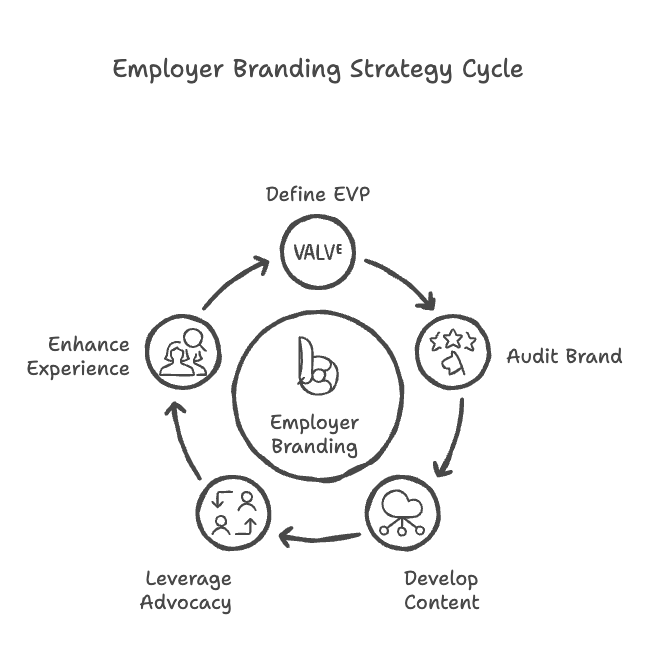
Step 1: Define Your Employer Value Proposition
Start by answering fundamental questions: What makes your company unique? What opportunities do you offer that competitors don't? How do your values align with your employees' aspirations?
Conduct interviews with your top employees. Ask them why they joined, what keeps them engaged, and what they love about your organization. These insights shape an EVP that's authentic and compelling.
Step 2: Audit Your Current Employer Brand
What perception do candidates and employees currently have of your company? Conduct surveys, review feedback, and monitor online reputation. Check Glassdoor reviews, social media mentions, and LinkedIn conversations. This evaluation reveals gaps between your intended brand and actual perception.
Step 3: Develop Your Content Strategy
Content is the vehicle for your employer brand message. Create content that showcases:
- Employee success stories and career progression
- Day-in-the-life videos and behind-the-scenes content
- Company culture and values in action
- Learning and development opportunities
- Projects that demonstrate your organization's impact
Distribute this content across LinkedIn, Instagram, your career page, and job platforms. Consistency across digital channels strengthens your employer brand presence.
Step 4: Leverage Employee Advocacy
Empower your employees to share your brand story. Provide them with talking points, content, and tools. When employees authentically promote your company on social media, it carries more weight than corporate messaging. Employee advocacy increases reach and builds credibility.
Step 5: Enhance Your Candidate Experience
Your recruitment process is a critical employer brand touchpoint. From application to interview, treat candidates with respect and transparency. Clear communication, timely feedback, and professional interactions leave lasting impressions—even with those you don't hire.
| Branding Element | Action Items | Expected Impact |
|---|---|---|
| Employer Value Proposition | Define unique opportunities, values, culture | Attracts aligned talent |
| Content Strategy | Create employee stories, videos, behind-the-scenes content | Increases brand visibility and engagement |
| Social Media Presence | Post regularly on LinkedIn, Instagram, company blog | Strengthens employer brand recognition |
| Employee Advocacy | Equip employees to share brand messaging | Expands reach and authenticity |
| Candidate Experience | Streamline recruitment process, provide transparent communication | Improves reputation and application rates |
Key Elements of Effective Employer Branding
Authenticity Above All
Candidates can detect inauthentic messaging instantly. Your employer brand must reflect reality. If your company culture is collaborative, show it through real employee interactions. If you prioritize innovation, demonstrate it through actual projects. Authenticity builds the trust necessary for candidates to believe your promise.
Transparency in Communication
Candidates want honest information about salary ranges, career paths, and workplace flexibility. Transparent communication attracts talent who align with your reality rather than false expectations. This reduces misalignment and improves long-term retention.
Visual and Video Content
Video content significantly outperforms text-only messaging. Employee testimonials, company culture videos, and role walkthroughs create emotional connections. Invest in quality video production to showcase your workplace and team dynamics.
Mobile-First Approach
Most candidates research companies on mobile devices. Ensure your career page, job postings, and social media content are optimized for mobile viewing. Fast loading times and intuitive navigation improve the candidate experience.
Measuring Your Employer Branding Success
Key Performance Indicators
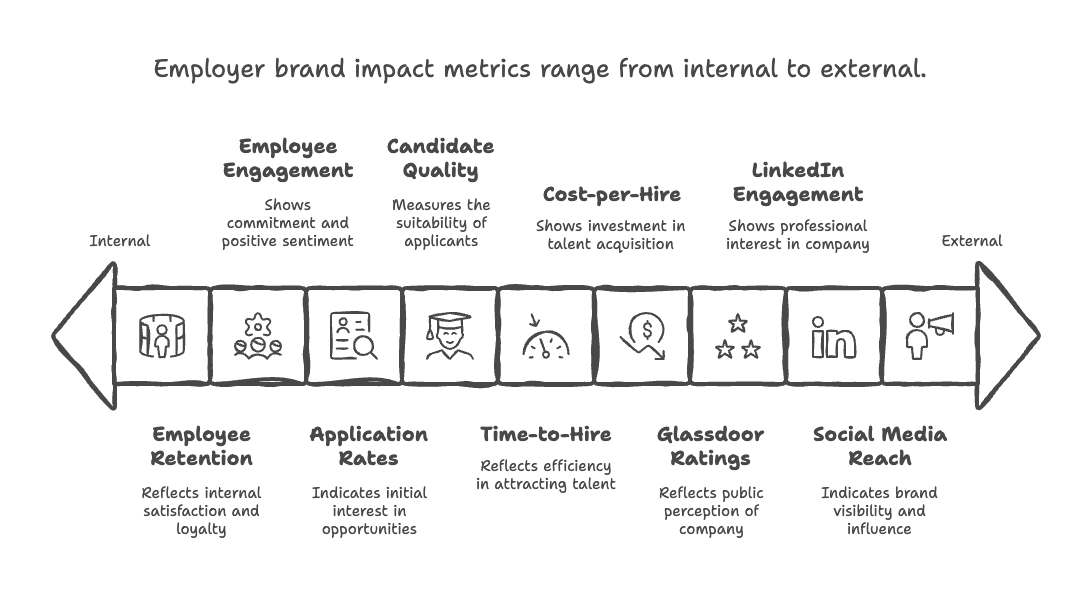
Track metrics that reveal your employer brand impact:
- Application rates and candidate quality
- Time-to-hire and cost-per-hire
- Employee retention rates and tenure
- Employee engagement scores and feedback
- Social media reach, engagement, and follower growth
- Glassdoor and online reputation ratings
- LinkedIn profile views and content engagement
Data-Driven Optimization
Use data to refine your strategy. Which content types generate the most engagement? Which channels attract the highest-quality candidates? Where do candidates drop off in your recruitment process? Answer these questions and adjust your approach accordingly.
| Metric | What It Measures | How to Improve |
|---|---|---|
| Application Rates | Employer brand attractiveness | Enhance EVP, improve job descriptions |
| Time-to-Hire | Recruitment efficiency | Streamline process, strengthen candidate pipeline |
| Retention Rate | Long-term brand credibility | Invest in employee development and culture |
| Social Engagement | Brand visibility and interest | Create more engaging, authentic content |
| Reputation Scores | Overall employer perception | Address feedback, highlight positive employee experiences |
Implementing Employer Branding Across Your Organization
Align HR, Marketing, and Leadership
Employer branding requires cross-functional collaboration. HR understands employee experience, marketing drives external messaging, and leadership sets organizational vision. When these teams align around your employer brand, execution becomes seamless and messaging remains consistent.
Create Your Employer Branding Guide
Document your brand positioning, tone, visuals, and key messages. Your guide ensures consistency across all communications. Include employee story templates, content guidelines, and social media best practices. This resource empowers your team to represent your brand authentically.
Integrate Branding Into Your Hiring Process
From job description to interview, your employer brand should shine through. Job postings should reflect your culture and values. Interviews should showcase your team and workplace environment. Candidates who experience your brand throughout the hiring process make more informed decisions.
Common Employer Branding Challenges and Solutions
Challenge: Inconsistent Messaging Across Platforms
Solution: Develop a comprehensive brand guide and train your team. Use templates and pre-approved content to maintain consistency while allowing flexibility. Regular audits ensure alignment across channels.
Challenge: Difficulty Finding Authentic Employee Stories
Solution: Build a culture where employees feel comfortable sharing. Implement regular feedback sessions, employee surveys, and informal conversations. Make storytelling easy—provide tools, templates, and recognition for employees who participate.
Challenge: Limited Budget for Content Production
Solution: Leverage your employees as content creators. Smartphone videos, authentic photos, and testimonials are often more powerful than polished productions. Focus on consistency and authenticity rather than production quality.
Challenge: Measuring ROI and Demonstrating Impact
Solution: Establish clear metrics from the start. Track application sources, employee retention, and engagement rates. Connect employer branding efforts to tangible business outcomes like reduced cost-per-hire and improved team performance.
Social Media as Your Branding Platform
LinkedIn for Professional Branding
LinkedIn is your primary platform for employer branding. Post content about company milestones, employee achievements, career development opportunities, and industry insights. Encourage your employees to follow your company page and share content on their profiles.
Instagram for Culture Showcase
Instagram humanizes your brand. Share behind-the-scenes photos, team celebrations, workplace moments, and employee spotlights. The visual nature of Instagram makes it ideal for showcasing your culture and workplace environment.
Company Blog for Thought Leadership
Establish your organization as an industry leader. Publish blog posts about industry trends, best practices, and company insights. This positions your employees as experts and demonstrates the caliber of talent your company attracts.
Sustaining Your Employer Brand Long-Term
Adapt to Changing Candidate Expectations
What candidates value evolves. Monitor trends in workplace expectations—remote flexibility, mental health support, diversity initiatives, and purpose-driven work. Update your employer brand messaging to reflect these shifts and remain competitive.
Continuously Gather Employee Feedback
Your employees are your honest critics. Regularly solicit feedback about what's working and what isn't. Use pulse surveys, focus groups, and one-on-one conversations to understand their experience and perception of your employer brand.
Invest in Professional Development
A strong employer brand requires investing in your team. Create clear career progression paths, offer training opportunities, and support professional growth. When employees feel their development matters, they become passionate advocates for your company.
Build Community and Belonging
Beyond job responsibilities, employees seek belonging. Foster a sense of community through mentoring programs, team events, and inclusive workplace practices. When employees feel connected to their organization and teammates, retention improves and your employer brand strengthens naturally.
From Strategy to Action: Practical Next Steps
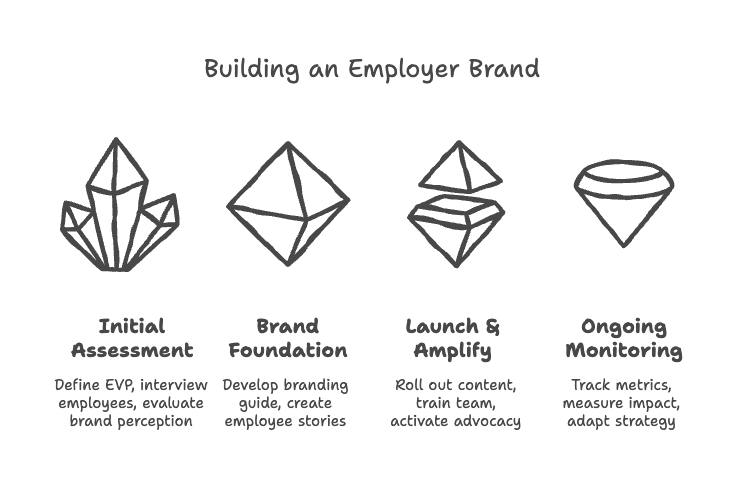
Month One: Define and Audit
Work with your leadership team to clearly define your employer value proposition. Conduct interviews with top-performing employees to understand what makes your company appealing. Evaluate your current brand perception through surveys and online research.
Month Two: Create Your Brand Foundation
Develop your employer branding guide. Create authentic employee stories and testimonial content. Audit your career page, job descriptions, and online presence for consistency and alignment with your brand promise.
Month Three: Launch and Amplify
Roll out your employer brand content across channels. Train your team on your branding guide and messaging. Activate employee advocacy programs. Begin tracking metrics to measure impact.
Ongoing: Monitor, Measure, and Adapt
Monthly, review your metrics. Which content resonates most? Where do candidates engage? What feedback are you receiving? Adjust your strategy based on data and evolving market trends. Employer branding is never truly complete—it's an ongoing process of refinement and growth.