
Best Job Interview Questions to Ask Candidates: Proven Strategies to Assess Talent and Cultural Fit
Master the best job interview questions to evaluate candidates effectively. Learn what to ask for talent assessment, culture fit, and better hiring decisions.
Understanding What Makes Strong Interview Questions
When you're evaluating candidates, the right interview questions can reveal far more than a resume ever will. Your hiring process depends on asking the right questions that help you understand not just what a person can do, but who they are as a professional. How does your educational background prepare you for this job? This simple question opens the door to understanding candidate positioning.
Strong interview questions serve multiple purposes. They help you assess specific competencies, understand work experience, evaluate cultural fit with your team, and identify people who will perform well in the position. The best candidates often differentiate themselves through thoughtful responses to challenging questions that make them think beyond standard answers.
Try Whileresume
Publish my resumeEssential Questions for Talent Assessment
Can You Describe a Time When You Went Above and Beyond What Was Required in Your Job?
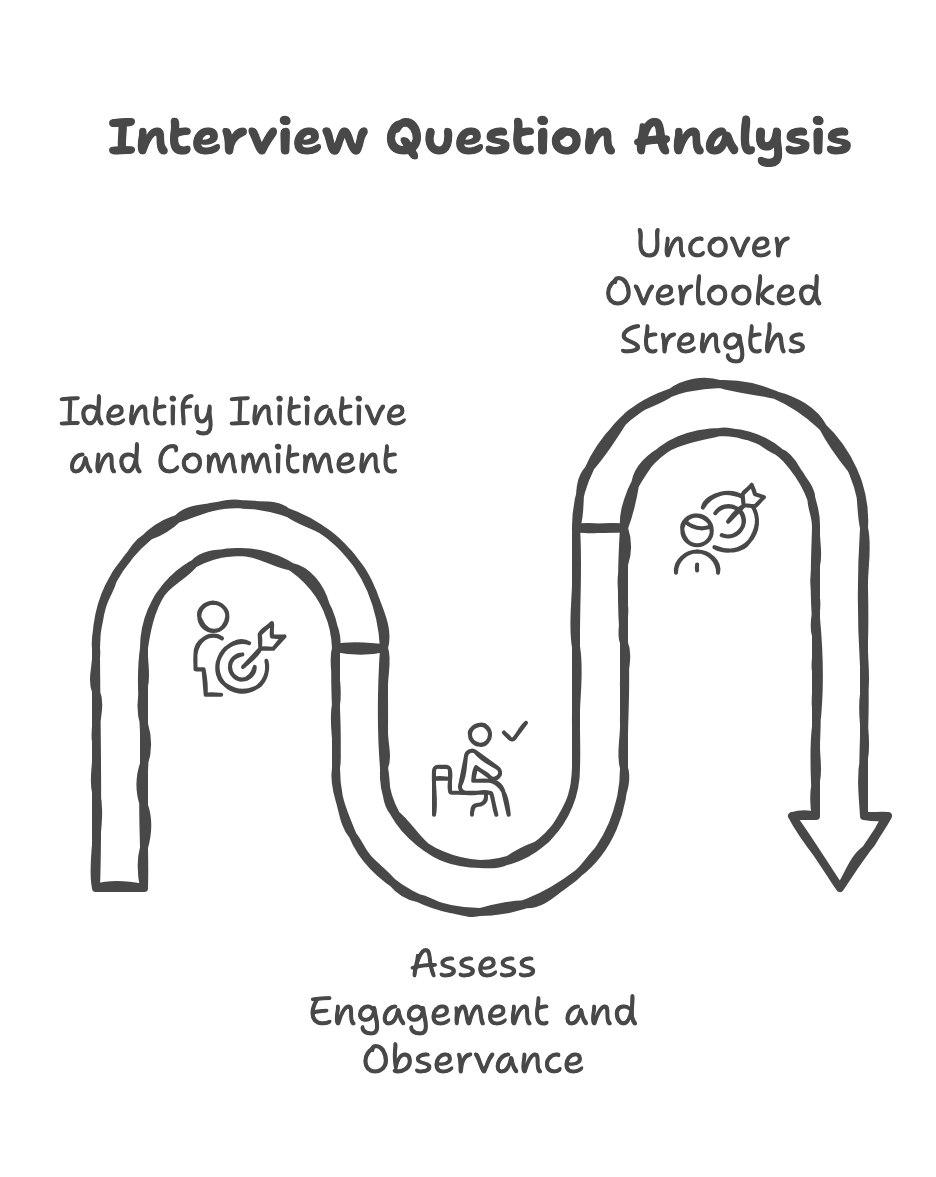
This question helps you identify candidates who demonstrate initiative and commitment. Their response reveals whether they understand the difference between meeting expectations and exceeding them. Listen for specific examples that show how they achieved goals and contributed to business success. Strong candidates will provide concrete examples from their career experience, demonstrating their ability to take on challenging tasks and deliver results.
What's Surprised You About the Interview Process So Far?
This simple question offers surprising insight into how candidates think on their feet. It demonstrates whether they're engaged, observant, and willing to share authentic perspectives. The response shows their level of communication skills and comfort with honest conversation. You'll understand if they're simply going through the motions or genuinely interested in learning about your organization and the role.
What Isn't on Your CV That Is Important for Me to Know?
Resume checking is standard, but this question goes deeper. It invites candidates to highlight strengths and accomplishments they feel are overlooked. Perhaps they managed a difficult project that wasn't formally documented, or they developed key skills outside traditional work settings. This response reveals what candidates believe defines their professional identity and potential for success in your company.
Building Questions for Cultural and Team Fit
How Do You Approach Teamwork and Collaboration?
Understanding how candidates work with others is critical. Ask them to explain a situation where they had to work with someone they found difficult. Their response demonstrates emotional intelligence, conflict resolution abilities, and commitment to team productivity. Does the candidate focus on communication? Understanding different perspectives? Taking responsibility for outcomes? These elements define their ability to build strong working relationships.
Describe Your Experience with Cross-Functional Projects
Marketing roles, customer-facing positions, and management opportunities all require collaboration across departments. Candidates should provide specific examples of how they worked with people from different teams, managed competing priorities, and achieved positive results. Listen for evidence of flexibility, adaptability, and a genuine appreciation for different viewpoints and expertise.
How Do You Define Success in Your Career?
This question reveals what candidates value and where they're headed professionally. Their answer shows whether their definition of success aligns with your organization's goals. Someone seeking rapid advancement might not be satisfied with a stable position. Someone focused on work-life balance might struggle in a demanding role. Understanding expectations early prevents hiring wrong candidates.
Evaluating Problem-Solving and Hard Skills
Tell Me About a Complex Problem You Recently Solved
Ask candidates to walk through their problem-solving process. How do they define difficult tasks? What steps do they follow? Do they gather data before making decisions? Do they collaborate with others or work independently? Their ability to explain a complex situation in clear terms demonstrates communication ability and organizational thinking. This is where you evaluate actual technical knowledge and real-world application.
What's Your Approach to Learning New Skills?
Technology changes constantly. Markets shift. Your organization evolves. Candidates who demonstrate a commitment to learning will adapt better to change. Ask about a specific skill they learned recently and how they approached the challenge. Did they use available resources? Ask colleagues for help? Invest personal time? Their response shows whether they take responsibility for professional development and have the potential to grow in your organization.
| Question Type | What It Measures | Best For Role Types |
|---|---|---|
| Behavioral Questions | Past performance, specific competencies, work approach | Any position requiring demonstrated skills |
| Situational Questions | Decision-making, problem-solving, values under pressure | Management, leadership, client-facing roles |
| Culture-Fit Questions | Values alignment, team compatibility, communication style | All positions, especially team-focused environments |
| Technical Questions | Specific job knowledge, expertise, capability | Specialized positions, technical roles |
| Growth Questions | Ambition, learning ability, long-term potential | Entry-level through mid-senior positions |
Questions That Reveal Work Ethic and Reliability
Tell Me About Your Hardest Day at Work
This question moves beyond success stories. Everyone has faced difficult situations. The way candidates describe their worst day reveals resilience, perspective, and how they handle stress. Do they blame others or take responsibility? Do they focus on what went wrong or what they learned? Their response shows character traits that define their reliability and ability to perform under pressure.
How Do You Handle Feedback and Criticism?
The best employees embrace feedback as a path to improvement. Ask candidates about a specific time they received critical feedback and how they responded. Did they get defensive or did they reflect? Did they make changes? Their answer demonstrates coachability and willingness to develop professionally. This matters for all positions but especially for roles where continuous improvement drives success.
Interviewing for Specific Roles and Industries
Marketing and Customer-Facing Candidates
When interviewing marketing or customer candidates, ask about campaign results, client relationships, and how they measure success. Request specific examples of projects that generated data-backed results. Ask about their understanding of target audiences. For customer-facing roles, evaluate communication style, empathy, and problem-solving ability. These candidates need to demonstrate creativity, analytical thinking, and genuine interest in customer experience.
- "Describe a marketing initiative that didn't perform as expected and how you adjusted your approach"
- "Tell me about your experience with customer feedback and how you've incorporated it into strategy"
- "How do you stay current with industry trends and competitive landscape?"
- "Share an example where you had to explain a complex concept to a non-technical audience"
Reading Between the Lines: What to Look For in Answers
Specific Details vs. Vague Responses
Strong candidates provide specific examples with details. Weak responses stay general and theoretical. When someone says "I work well with teams," that's not nearly as valuable as "I coordinated with three departments to launch a product feature that increased user engagement by 25%." Specificity shows they've actually experienced success, not just understand concepts in theory.
Accountability in Storytelling
Listen for how candidates describe their role in outcomes. Do they take responsibility or shift blame to circumstances? The best candidates explain what they did personally, what they learned, and how they'd approach similar situations differently. This demonstrates maturity, self-awareness, and genuine understanding of their impact on organizational success.
Alignment with Your Company Culture
As you evaluate responses, notice whether candidates ask thoughtful follow-up questions about your organization. Do they show genuine interest? Do their values seem aligned with company culture? The interview process works both ways. Candidates who ask insightful questions about the role, team, and organization demonstrate engagement and serious interest in the position.
| Strong Answer Indicators | Warning Signs |
|---|---|
| Specific examples with measurable outcomes | Generic responses that could apply to many situations |
| Clear ownership of results and decisions | Blame-shifting or vague responsibility |
| Evidence of learning from difficult experiences | Lack of reflection or growth mindset |
| Genuine curiosity about the role and company | Disengagement or minimal questions asked |
| Communication that's clear and organized | Rambling answers or difficulty articulating thoughts |
| Enthusiasm about specific aspects of the position | Generic interest or focus only on salary and benefits |
The Closing Question Every Interviewer Should Ask
Do You Have Any Questions for Me?
Never skip this question. Strong candidates will have thoughtful questions about the role, the team, success metrics, or company direction. Their questions reveal what matters to them and how seriously they're considering the position. A candidate with no questions might not be genuinely interested. One with strategic, informed questions demonstrates they've done research and are thinking deeply about the opportunity.
This final exchange often provides the most authentic interaction of the entire interview. The candidate's questions and your answers together create mutual understanding about whether this role and this person are truly compatible.
Creating Your Customized Interview Question Strategy
Balancing Different Question Types
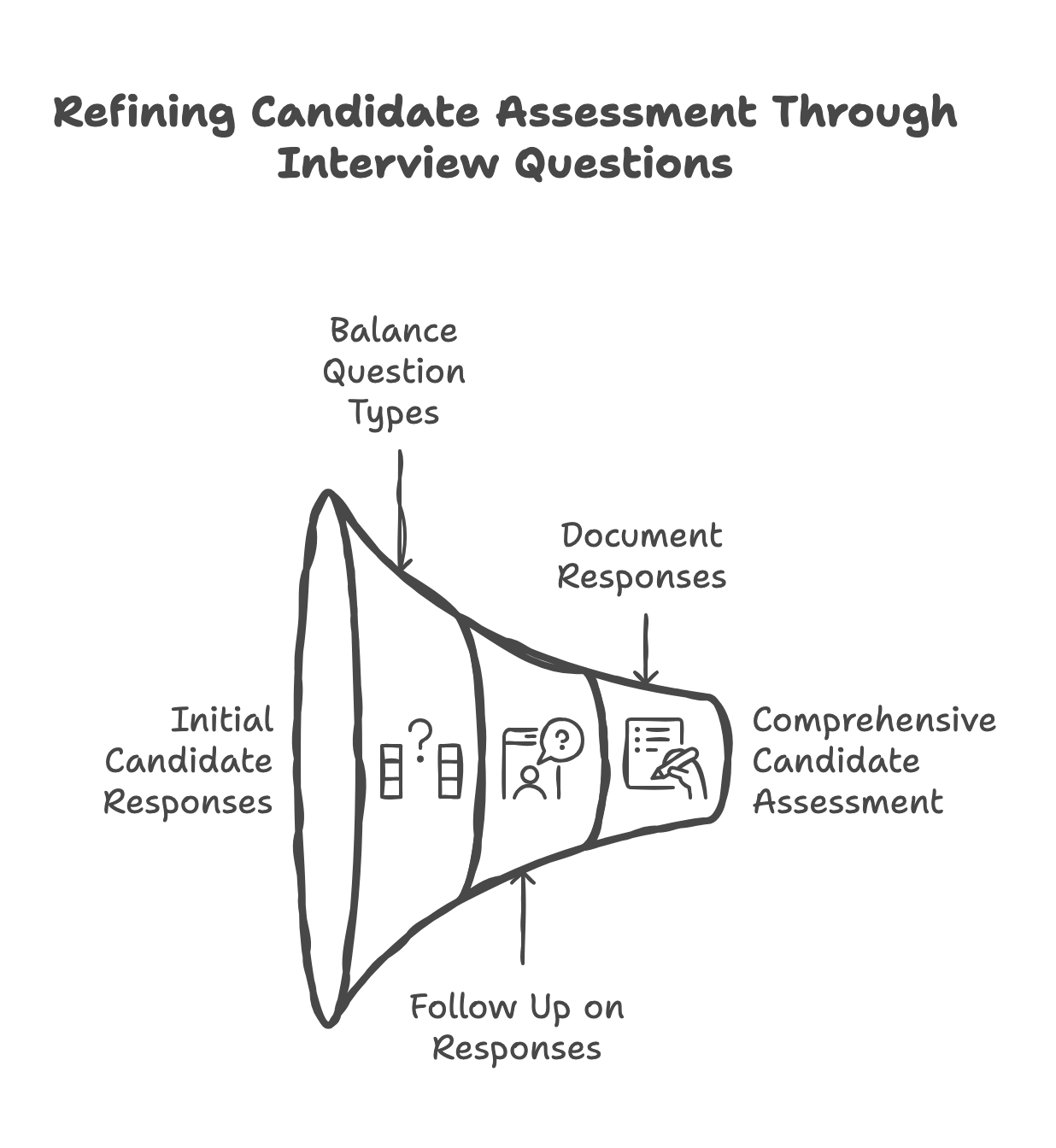
Your hiring process should include behavioral questions that reveal past performance, situational questions that show decision-making ability, and culture-fit questions that assess values alignment. Don't rely only on one type. A balanced approach gives you multiple perspectives on each candidate's potential for success in your environment.
Following Up on Initial Responses
The most skilled interviewers listen actively and ask follow-up questions. When a candidate mentions a project, ask how they handled a specific challenge within that project. When they discuss working with difficult team members, ask what strategies actually worked. Deep follow-up reveals whether they truly understand their experiences or are reciting prepared answers.
Taking Notes for Later Review
Document specific responses, examples, and your impressions. When you interview multiple candidates across several days, detailed notes help you recall key differentiators. Compare how different candidates approached similar questions. Which responses demonstrated stronger problem-solving? Better communication? Greater alignment with company values?
Avoiding Wrong Questions and Ineffective Approaches
Why Generic Questions Miss the Mark
"Tell me about yourself" is such a common opening that candidates have perfected their pitch. It often produces rehearsed responses that don't reveal authentic insights. More targeted questions—ones specific to your role, industry, or company—tend to generate more genuine, thoughtful responses that help you truly understand the person and their potential.
Steering Clear of Illegal or Discriminatory Questions
Stay focused on job-related qualifications. Never ask about age, family status, religious beliefs, or other protected characteristics. Questions about health conditions or disability are off-limits unless directly relevant to essential job functions. Your interview should evaluate job skills, experience, and cultural alignment exclusively.
Building Long-Term Success Through Smarter Hiring
The interview is your chance to make informed hiring decisions that impact your organization's success. Thoughtful questions reveal whether a candidate has the technical ability to perform the job, the communication skills to work effectively with your team, and the values that align with your company culture. When you hire right, you build productive teams where people contribute at high levels and stay committed to shared goals.
Your interviewing process should continue to evolve. Pay attention to which candidates succeed in roles and which struggle. Compare their interview responses to their actual job performance. Over time, you'll identify which questions predict success and refine your approach accordingly. This iterative learning makes you a better interviewer and helps your organization hire stronger talent consistently.
- Use specific behavioral and situational questions rather than generic openers
- Listen for concrete examples, not theoretical understanding
- Assess cultural fit alongside technical capability and experience
- Always invite questions back from candidates to gauge genuine interest
- Document responses carefully for fair comparison across all candidates
- Follow up with clarifying questions to understand experiences more deeply