
Activity-Based Working Software: Transform Your Workplace Strategy
Discover how activity-based working software streamlines collaboration, tracking, and workplace management. Implement ABW strategies for your hybrid teams today.
What Is Activity-Based Working and Why It Matters
Activity-based working represents a fundamental shift in how companies approach the workplace. Rather than assigning fixed desks to employees, ABW allows workers to choose different spaces based on their specific tasks. Need to focus? Find a quiet zone. Collaborating with teams? Head to a meeting space. This flexible approach transforms workplace management from rigid to responsive.
Try Whileresume
Publish my resumeThe activity-based workplace model answers a critical question: why force employees into predetermined seating when their work requires different environments throughout the day? Modern companies are discovering that this approach increases productivity while reducing real estate costs.
Understanding the ABW Concept
Activity-based working isn't just about removing assigned desks. It's a comprehensive strategy combining technology, design, and company culture. The platform connects employees with the right spaces at the right time. Think of it as matching tasks to environments—deeper focus requires a quiet desk, while brainstorming demands a collaborative area.
Companies implementing ABW report stronger employee engagement. When workers access spaces designed for their specific activities, they accomplish more in less time. The technology behind ABW makes this coordination seamless across your entire workforce.
The Benefits of Activity-Based Working
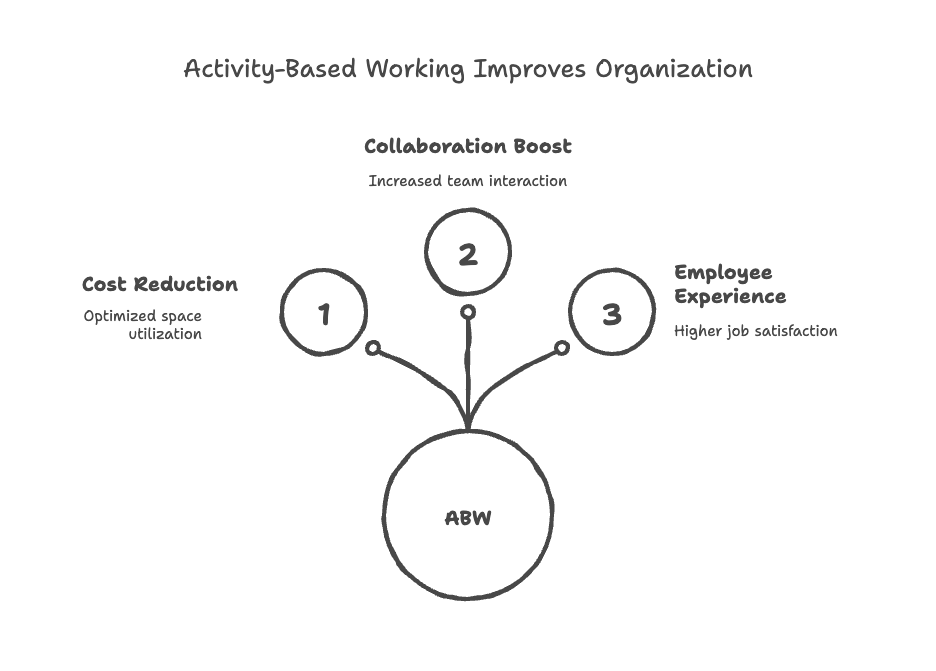
Does activity-based working actually deliver results? The data suggests yes. Organizations that embrace ABW experience measurable improvements across multiple dimensions. From cost management to employee satisfaction, the benefits span organizational priorities.
Cost Reduction and Space Utilization
Activity-based working software provides real data on occupancy patterns. Instead of guessing how many desks your company needs, you track actual usage. This information drives smarter facility decisions. Many enterprises discover they can reduce their physical footprint by 20-30% without compromising employee experience.
The investment in activity-based management technology pays for itself through reduced furniture costs, lower facility overhead, and optimized real estate. Your company pays for space that actually gets used rather than empty desks gathering dust.
Enhanced Collaboration and Interaction
When teams access flexible workspaces, something unexpected happens: collaboration increases. Employees working on different projects naturally encounter colleagues, sparking conversations that wouldn't occur in traditional office layouts. The activity-based approach encourages organic networking while maintaining focus areas for concentrated work.
Remote and hybrid workers benefit equally. The software enables booking meeting spaces and collaborative zones, ensuring distributed teams connect effectively. Interaction becomes intentional rather than accidental.
Improved Employee Experience
Your workforce wants flexibility. Activity-based working delivers it. Employees choose where they work based on their needs that day—not management requirements. This autonomy drives job satisfaction and helps retain talent. The experience feels less like surveillance and more like support.
Organizations that implement ABW thoughtfully see lower turnover and higher engagement scores. When people control their work environment, they feel respected and trusted.
Key Features of Activity-Based Working Software
What does activity-based working software actually do? The platform manages desk booking, space reservation, occupancy tracking, and team coordination. These features work together to create a functioning ABW environment.
Space Booking and Management
Employees access the software—whether through browser, mobile app on iOS or Android—and book spaces matching their activities. Need a quiet desk for focused work? The platform shows available options. Planning a team meeting? Reserve a collaborative room. This booking system prevents conflicts and ensures everyone finds appropriate space.
The software integrates with calendar systems, making reservations simple. Mobile access means workers book spaces from anywhere, whether they're remote, at the office, or traveling.
Occupancy and Utilization Tracking
Activity-based working requires understanding how space actually gets used. Unlike invasive monitoring tools like Activtrak or Hubstaff that track mouse and keyboard activity, smart ABW platforms focus on space utilization. Sensors and booking data show which areas generate value and which need redesign.
This tracking supports facility management decisions. You identify underutilized zones, redesign them for better purpose, and measure the impact. Data drives strategy rather than guesswork.
| Monitoring Approach | Focus Area | Privacy Level |
|---|---|---|
| Space Utilization Tracking | Where employees work | High |
| Activity Monitoring (Activtrak, Hubstaff) | Mouse/keyboard activity | Low |
| Collaborative Analytics | Team interaction patterns | Medium |
Team Communication and Coordination
Activity-based working software connects people and teams. When employees see where colleagues are working, coordination becomes easier. Need to find a teammate? Check the platform. Want to organize an impromptu meeting? Book a space and notify team members through the software.
The platform creates a digital layer on top of physical space, bridging remote and in-office workers. Everyone understands where activities are happening and how to participate.
Implementing Activity-Based Working: Strategies and Best Practices
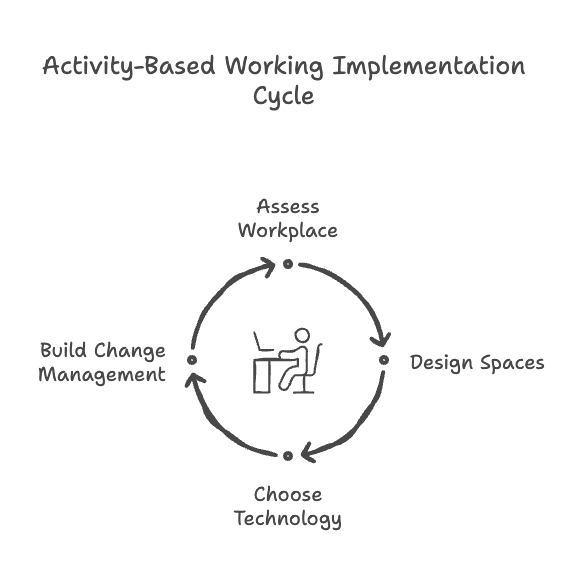
Moving from assigned seating to activity-based working requires thoughtful planning. Success depends on getting three elements right: technology, design, and culture. Leading experts emphasize the importance of following activity-based workspace design best practices to ensure a successful implementation.
Assess Your Current Workplace Environment
Start by understanding your existing setup. What types of work does your team perform? Which activities require focus, and which demand collaboration? What does your current workplace look like—open plan, private offices, meeting rooms?
Survey employees about their preferences. Are they considering moving to flexible working? Do they already work hybrid or remote? Their feedback shapes what spaces you actually need to design.
Design Spaces for Specific Activities
Activity-based working isn't one-size-fits-all. Your company needs variety: quiet zones for deep focus, collaborative areas for brainstorming, phone booths for calls, casual spaces for informal conversations. The design should reflect your organization's actual work patterns. Organizations like CBRE have developed comprehensive activity-based working design models that incorporate these diverse space types.
- Quiet desks and focus pods for concentrated work
- Meeting rooms with different capacities
- Collaborative tables for group projects
- Phone booths for confidential calls
- Casual zones for social interaction
- Executive spaces for one-on-ones
Each space type supports different activities. The software ensures employees find what they need quickly rather than settling for inadequate options.
Choose the Right Technology
Your activity-based working software is the backbone of implementation. The platform must be intuitive on mobile and browser, integrate with calendar systems, and provide actionable data. Security and privacy matter—you're managing how people access workplace resources, not surveilling their activities.
Consider tools that provide both employee experience and management insights. Can workers easily book spaces? Can facility managers understand utilization patterns? Does the software support both in-office and remote team coordination?
Build Change Management Into Your Plan
Implementing activity-based working represents cultural change. Employees used to assigned seats need to understand the benefits. Leadership must champion flexibility genuinely, not just mandate it. Support from management makes the difference between smooth adoption and resistance.
Provide training on the software. Celebrate early wins. Share data showing improved utilization and cost savings. Let employees experience the benefits directly rather than telling them it's better.
Measuring Success: Key Metrics for Activity-Based Working
How do you know if your activity-based working initiative delivers? Track metrics that matter to your business and employees.
Occupancy and Utilization Rates
Monitor how fully your spaces operate. Are quiet zones consistently full while meeting rooms sit empty? This data reveals whether your design matches actual work patterns. High utilization in areas you've optimized shows the strategy is working.
Track occupancy by time of day and day of week. Many companies discover their office peaks on specific days, allowing flexible scheduling that supports both in-office and remote work preferences.
| Metric | What It Measures | Business Impact |
|---|---|---|
| Occupancy Rate | Percentage of desks/spaces in use | Cost optimization |
| Space Utilization by Type | Which spaces are used most | Design refinement |
| Booking Conversion | Reserved spaces that get used | System effectiveness |
| Employee Satisfaction | Satisfaction with workspace | Retention and engagement |
Productivity and Collaboration Indicators
Beyond occupancy, measure what matters: are employees getting their work done? How much are teams collaborating? Activity-based working should enable both focus and interaction. When both increase, your implementation succeeds.
Survey teams about their experience. Can they easily access spaces they need? Do they feel productive working flexibly? Have spontaneous conversations increased? Qualitative feedback complements quantancy data.

Financial Performance
Track real estate costs, facility overhead, and technology investment. Activity-based working typically reduces square footage requirements and associated expenses. Calculate your return on investment—many organizations break even within 18-24 months.
Which Companies Benefit Most From Activity-Based Working?
Activity-based working works well for specific company types and industries. Understanding if ABW fits your organization prevents wasted implementation efforts.
Professional Services and Consulting
Consulting firms see immediate benefits. Consultants spend time at client sites, rotating between projects, and collaborating with diverse teams. Flexible seating means no empty desks waiting for traveling staff. These companies often lead ABW adoption and achieve the strongest returns.
Technology and Software Companies
Tech organizations value flexibility and attract talent seeking autonomy. Activity-based working aligns with their culture. Remote-first technology companies implementing hybrid models find ABW provides structure without rigidity. Developers and designers appreciate quiet focus areas while maintaining team connection.
Financial Services
Banks and financial institutions benefit from occupancy management and cost control. Compliance requirements around data security align well with privacy-conscious activity-based working approaches. These regulated industries can manage ABW implementation rigorously.
Large Enterprises
Companies with 500+ employees achieve significant savings through activity-based working. The law of large numbers means utilization improvements multiply across multiple locations. Enterprise-level organizations have both the budget for proper implementation and the complexity that ABW simplifies.
Addressing Common Concerns About Activity-Based Working
Some employees and managers hesitate about activity-based working. Understanding concerns helps you address them effectively.
Privacy and Monitoring Concerns
Are companies tracking mouse and keyboard activity through ABW software? Not if you implement correctly. Smart activity-based working focuses on space usage, not employee surveillance. The distinction matters enormously for culture and compliance.
Set clear privacy policies. Communicate what data you collect (space booking) and what you don't (individual activity monitoring). When employees understand you're optimizing spaces rather than surveilling work, trust increases.
Loss of Personal Space
Without assigned desks, employees lose personalization opportunities. Design personal lockers or small storage areas where workers can keep items. Alternatively, provide small personal sections in shared desks. This compromise maintains flexibility while acknowledging the human need for a place to call yours.
Consistency and Fairness
How do you ensure equitable access to preferred spaces? Good booking systems use algorithms that rotate priority. Some companies implement rules preventing one team from hoarding the best areas. Transparency about allocation methods prevents resentment.
The Future of Activity-Based Working
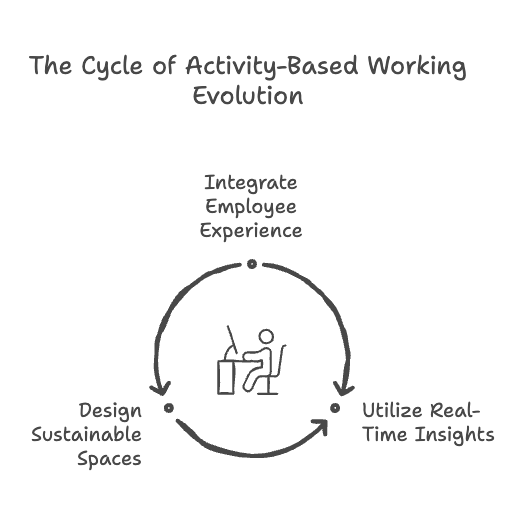
Activity-based working continues evolving. Advanced analytics, AI-powered space recommendations, and better integration with employee experience platforms are emerging. Companies implementing ABW now position themselves for future workplace flexibility.
Integration With Employee Experience
The next generation of activity-based working connects workspace management with broader employee experience. Your platform should manage collaboration, communicate company culture, and support wellbeing alongside space booking.
Real-Time Insights and Predictive Analytics
Modern software provides actionable insights instantly. Which teams work together? When does your office peak? These patterns inform facility planning, team organization, and company strategy. Predictive analytics help you design for future needs rather than past patterns.
Sustainability and Purpose-Built Spaces
Activity-based working reduces real estate footprint, supporting sustainability goals. Companies can design beautiful, purpose-built spaces that inspire work rather than maintaining sprawling offices with unused capacity. The environmental and human benefits align. Many organizations are discovering that implementing flex space design ideas not only improves employee satisfaction but also contributes to corporate sustainability initiatives.
Getting Started With Activity-Based Working
Ready to implement activity-based working? Start small, measure carefully, and scale what works. Successful implementation requires commitment from leadership, engagement from employees, and investment in the right technology.
- Define your current workplace challenges and goals
- Survey employees about their work patterns and preferences
- Design spaces matching identified activities
- Select technology supporting seamless booking and analytics
- Pilot the program with early adopter teams
- Measure utilization, satisfaction, and financial impact
- Refine based on data and feedback
- Scale across your organization with lessons learned

Activity-based working transforms workplace management from compliance exercise to competitive advantage. When you match spaces to activities and provide employees flexibility, you create an environment where people do their best work. The companies embracing this shift today are building the workplaces of tomorrow.